Everyday Jewellery: What Survives Daily Wear
- Trinket File
- Buying
- 11 Aug, 2026
The jewellery that survives daily wear is not the most expensive jewellery. It is the jewellery with enough metal in the right places. Two pieces can carry the same hallmark and the same price, and one will still be sound after twenty years while the other dents, opens or wears through. The difference is in construction: how thick the metal is, how the parts are joined, and what small components hold everything together.
This is the reason an inexpensive solid silver band can outlive an expensive plated bangle. Money spent on material and finish does not automatically buy metal at the points that take the load.
Mass against appearance
Hollow construction is the first thing to look for. A bangle, a chain link or a ring can be made as a tube from folded or drawn sheet rather than as solid metal, which gives a large visual presence at a fraction of the weight. Hollow pieces are not dishonest, and for earrings the lightness is a genuine advantage. Wear is where they fail: a hollow bangle dents on the first good knock, a hollow link crushes, and a dent in a closed tube is difficult to remove because the inside cannot be reached.
The practical test is straightforward. A piece that looks heavy and feels light in the hand is hollow. That is not a reason to reject it, but it is a reason to decide whether the piece will be worn in situations where it can be knocked.
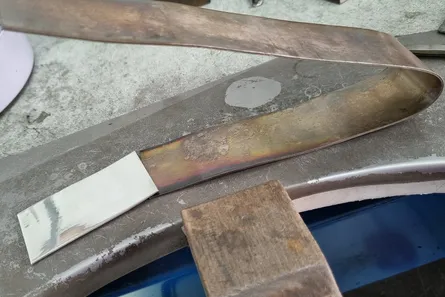
Wall thickness matters even in solid-looking pieces. Sheet metal used for pendants, brooch backs and earring fronts can vary a good deal in gauge, and thin sheet deforms and work-hardens at the same point over time. A jeweller can measure the thickness at an edge, and it is a fair question to ask before a repair.
Joints, hinges and articulation
Anything that moves is a place that wears. A hinged bangle, a box clasp, a hinged hoop, an articulated link and a charm bracelet with rivets all rely on a small pin or a knuckle of metal moving against another surface. That movement is the design, and the wear is unavoidable; the question is whether the joint has enough material to tolerate it.
The usual failure is play. A pin wears a slightly larger hole in the softer of the two metals, and the joint starts to move more than it should. Play in a hinge eventually lets the two halves sit out of line, and a clasp with play fails to hold. Testing takes seconds: hold one half still and move the other gently, and feel for looseness that should not be there.
Soldered joints need the same attention. A solder joint is only as strong as the area of contact and the quality of the work, and a butt joint between two small surfaces is weak however neat it looks. Where a joint is visible, look for a clean seam rather than a large blob of solder filling a gap, and ask whether the joint is soldered or simply pressed together. An unsoldered jump ring or finding, in a piece that takes any load, is a point of failure waiting for a firm pull.
Hardness and what scratches
Everyday grit includes quartz, which is harder than gold, silver, platinum and copper alloys. Soil, sand and many household dusts leave tiny quartz particles on hands and surfaces, and dragging a ring across a desk is effectively an abrasive test. This is why polished surfaces dull and why a ring shank shows a flat, hazy patch on the palm side after years of wear.
Hardness, though, is not the whole story. Toughness, meaning resistance to fracture, behaves differently from hardness, and the hardest materials are often the most brittle. Tungsten carbide and zirconia ceramics resist scratching almost entirely and can shatter on a sharp impact, and neither can be resized or easily cut off in an emergency. Gold alloys sit relatively low on the hardness scale and tolerate knocks well because they deform rather than break.
Finish changes how all of this looks. A high polish shows every fine scratch, while a brushed, satin or hammered finish hides them, and a deliberate patina in the recesses of a design hides wear as well. A piece that will be worn hard can reasonably be chosen in a finish that ages gracefully rather than one that requires restoration.
Findings: the small parts that fail first
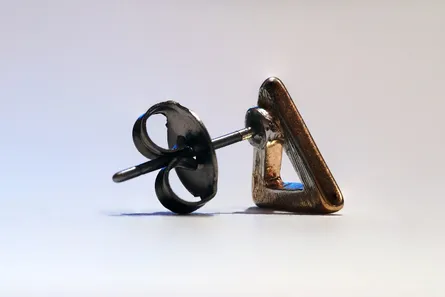
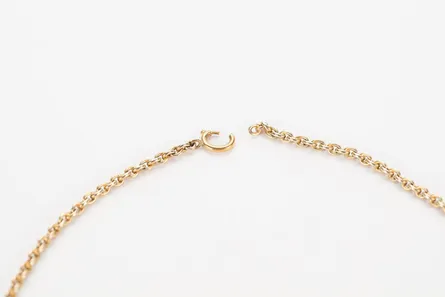
Findings are the clasps, jump rings, ear wires, pin stems and catches that complete a piece. They are cheap, they carry the load, and they are frequently the reason a good piece of jewellery is lost.
- Clasps on chains and bracelets are where load concentrates, and a light clasp on a heavy chain is the wrong pairing regardless of what the chain cost.
- Ear wires and posts deform, and a thin wire in a heavy earring both bends and concentrates pressure on the lobe.
- Brooch catches with a worn roller or a bent stem open without warning.
- Jump rings and split rings that are not soldered straighten under load.
The encouraging part is that findings are replaceable. A heavier clasp, a soldered jump ring or a new ear wire costs very little and can turn a fragile piece into a reliable one.
Chemicals and the wear they cause
Chlorine and some cleaning products attack jewellery alloys in ways that abrasion does not. In gold alloys, chlorine and other halogens attack the metals alloyed with the gold, leaving a porous, brittle surface in thin sections, which is why a ring can become weak after repeated exposure in a pool or a hot tub. Bleach, strong alkalis and hair dyes cause similar damage. Silver and copper alloys corrode and discolour. None of this is repaired by polishing, since the metal that has been leached out is gone.
The habits that avoid it are ordinary. Remove pieces before swimming, before cleaning, before gardening and before any work with chemicals. The point is not to treat jewellery as fragile but to keep it away from the situations where the damage is cumulative and irreversible.
A buying and checking routine
- Judge the piece by weight in the hand against its size, and treat an unexpectedly light solid-looking piece as hollow.
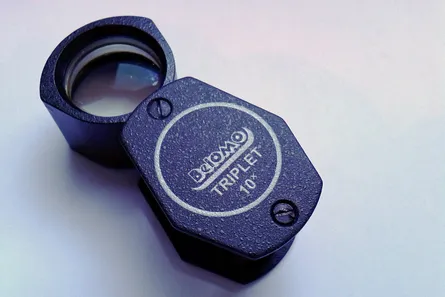
- Look at the edges of sheet-metal parts, where thickness can be judged by eye with a loupe.
- Test every joint for play, and every clasp for a definite action.
- Ask whether jump rings and end caps are soldered.
- Ask what the findings are made of and how easily they can be replaced.
- Choose finishes that tolerate wear if the piece will be worn daily.
- Weigh the cost of a plated piece against its likely life: for daily wear, solid metal in a lower carat or in silver usually outlasts a plated piece carrying a higher price.
A piece worn every day should be assessed as an object under load rather than as a design. Thickness at the wear points, solid joints and replaceable findings are the properties that decide whether it is still in use in ten years, and they can all be checked before money changes hands.