Tarnish, Plating Wear and What Can Be Restored
- Trinket File
- Care
- 26 Aug, 2026
A dulled piece of jewellery is usually called tarnished and treated with a polishing cloth. Sometimes that is right. Sometimes the dullness is not a film on the metal but metal that is no longer there, and polishing removes a little more of the surface each time. The two look alike at arm’s length and are handled in opposite ways.
The distinction is between a reaction layer and material loss. A tarnish film sits on the metal, and removing it leaves the metal beneath intact. Wear is the absence of metal, whether silver abraded away or plating thinned through to its base. No cloth or dip restores what has been worn off.
What tarnish actually is
Silver tarnishes when it meets sulphur compounds in the air, forming silver sulphide, a dark film that starts as a yellow tinge and turns brown then black. The reaction consumes almost no silver; the visible change is the layer. Rubber bands, some wool and felt, certain papers, and foods containing sulphur release those compounds, which is why silver kept in a drawer beside a rubber band discolours faster than silver in a sealed bag.
Copper reacts with oxygen and moisture to form oxides and salts, and the green layer on exposed copper is a mixture of them. The green mark sometimes left on skin is the same chemistry, a harmless copper salt formed where sweat meets metal. Brass, being copper with zinc, tarnishes similarly, and in chloride-rich conditions it can lose zinc from the surface, leaving a porous layer that polishing will not correct.
Gold does not tarnish as silver does, because the metal is unreactive, though the alloying metals in lower carats can discolour slightly, which is why rose gold and some 9 carat alloys change under the right conditions. Much of what looks like gold tarnish is a film of skin oils, soap and cosmetics that a soft cloth lifts off. Platinum, palladium, titanium and stainless steel do not tarnish in normal use. They dull from fine surface scratching, which is a separate problem.
A film against a worn surface
The test takes a moment. Rub a small area with a soft, dry cloth. Tarnish comes away as a grey or black smudge and the metal beneath brightens. A worn surface does not change at all.
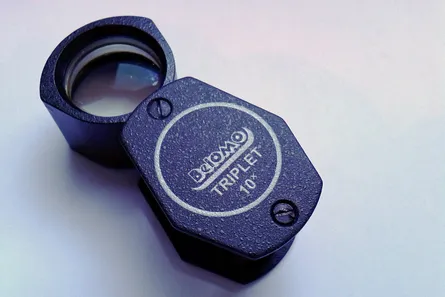
A loupe settles the second case. Wear-through starts at an edge or a high point and has a defined boundary, a thin line where one colour stops and another starts. On a plated ring it appears first on the palm side of the shank or along the outer edge. Tarnish follows the shape of the metal and fills recesses as readily as it covers high points. A deliberate oxidised or blackened finish in the recesses is a third case: chemical cleaners strip that contrast, and it has to be recreated by a jeweller.
Which metals tolerate polishing
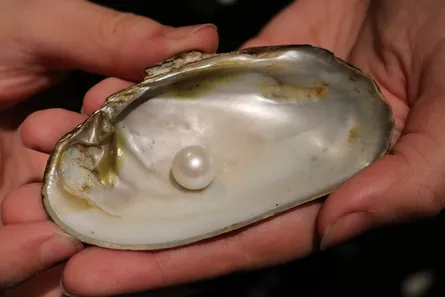
Polishing is abrasive even when the cloth is soft, and every pass removes metal. It belongs on solid metal only: pearls, opals, amber, coral and jet are damaged by abrasives and dips alike, and chemical cleaners strip a deliberate oxidised finish that has to be recreated by a jeweller.
- Sterling silver, solid: tolerates gentle polishing with a soft cloth and a light polish. Repeated heavy polishing on fine engraving or a thin chain wears the detail and thins the metal.
- Copper and brass, solid: tolerate polishing better, but they re-tarnish quickly, so a protective wax is sometimes used instead.
- Gold alloys: accumulate fine scratches, and restoring a high polish is a workshop job, because machine polishing removes metal and softens detail. A satin finish is re-finished rather than polished.
- Plated and silver-plated pieces: do not take abrasive polishing. The cloth wears through to the base metal, and the loss cannot be reversed at home.
Plating wear and how it progresses
Two kinds of plated construction are worth distinguishing. Electroplated gold, silver or rhodium is a thin layer over a base metal, often brass, copper or steel. Gold filled, historically rolled gold, is a much thicker layer bonded mechanically to the base and usually stated as a fraction, such as one twentieth of the weight at a given carat. The second wears far more slowly, which is why the gold filled label carries real information.
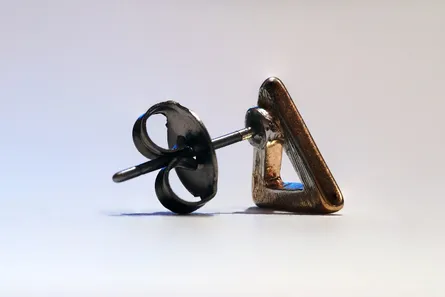
Wear-through follows contact: on a ring the shank and the edges, on a chain the highest points of the links and the clasp, on earrings the post and where the back rests, on a pendant the bail and the outer rim. Early wear is a colour shift or a hazier patch; later the base metal shows, and once exposed it corrodes and can discolour skin.
Rhodium plating is hard, bright and resistant to tarnish, and it is applied over white gold or other metals to give a white finish. It wears in the same high-contact places, and re-plating is a workshop process that strips the old layer and applies a new one.
The honest options, in order
- Leave it. A tarnish film on a piece that is not worn is stable once the storage is improved, and it does no harm.
- Clean chemically. A proprietary silver dip removes tarnish quickly without abrasion. Use it on plain silver only, rinse thoroughly, and keep it away from pearls, since it attacks nacre and the silk cord of a strand.
- Polish lightly. A soft cloth and a mild polish remove tarnish with a small amount of metal loss. On plating, the better answer is not to polish at all.
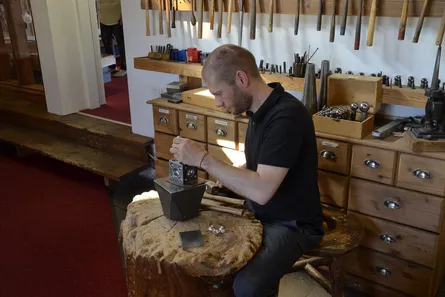
- Have a workshop re-polish. This restores a surface properly and can refinish a brushed effect, but it removes metal and cannot rebuild a worn edge.
- Re-plate. Gold and rhodium plating can be renewed, which is sensible on a piece whose base metal is sound. It cannot fill pitting or restore missing metal, and on an inexpensive piece the cost often exceeds the value.
- Replace. For a piece worn daily whose plating has reached the base metal, replacement is often the better use of money.
Storage that slows the process
Tarnish is a storage problem as much as a cleaning one. Keep silver dry and sealed, with an anti-tarnish strip in a lined box or a zip bag, and keep rubber bands, wool and sulphur-containing paper away from it. A bathroom is the worst place to keep silver. Plated pieces face the opposite risk: the enemy is abrasion, so keep each piece in its own soft pouch or compartment, and put jewellery on last and take it off first.
A checking routine
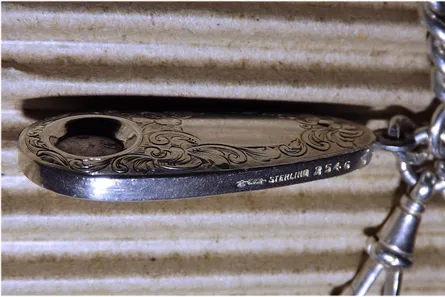
Before touching a dulled piece with anything, identify what is there. Look at it with a loupe and find where the change begins; a defined boundary at an edge points to wear, and a soft film across the whole surface points to tarnish. Check the hallmark to establish whether the piece is solid or plated, and look for an oxidised finish before choosing a chemical. Then take the least invasive option that will do the job: a dry cloth first, a mild polish next, a workshop only when the surface needs rebuilding, and nothing abrasive on plating. Knowing which problem is on the bench is what protects the piece from the cloth.