How to judge a piece of jewellery before you buy it
Trinket File publishes practical guides to jewellery and accessories: how materials and construction behave over time, what the marks on a piece actually mean, what to check in a second-hand sale, and how to resize, repair and look after what you already own.
Read the guides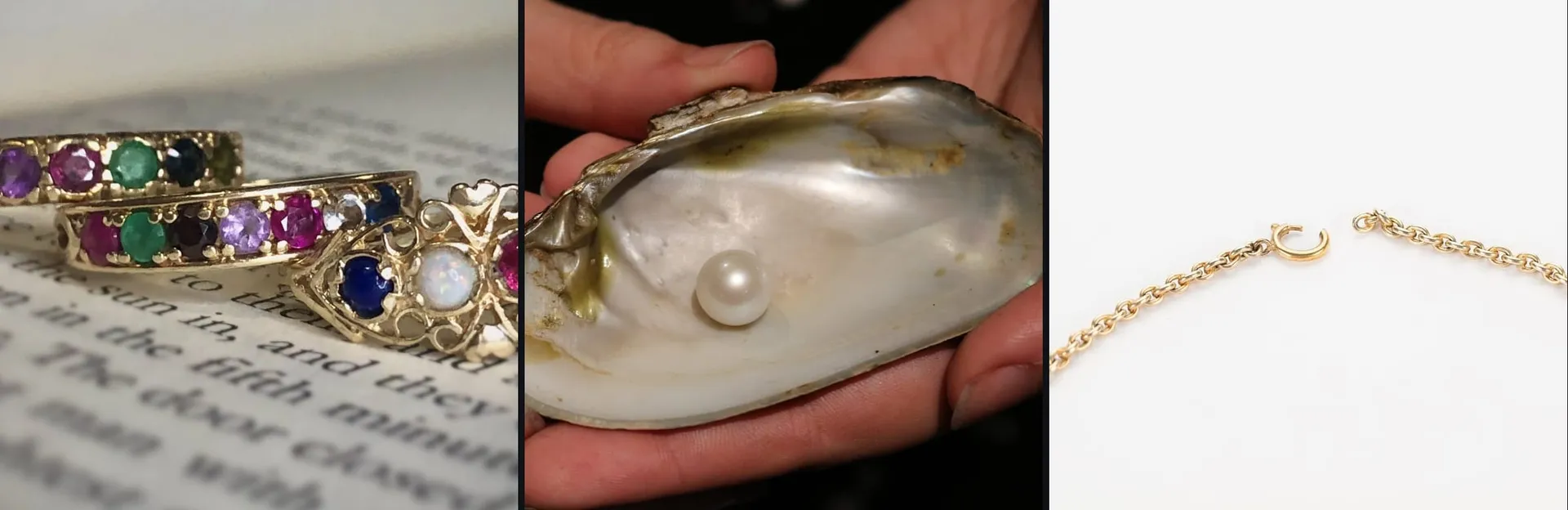
Materials and construction
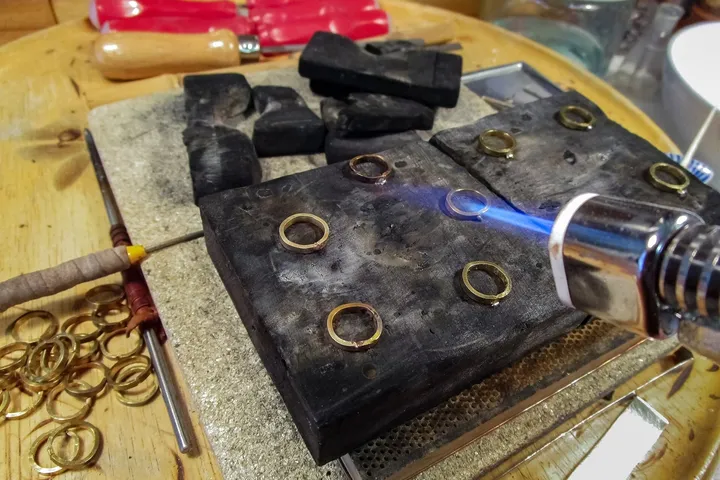
Decoration is easy to see from across a shop counter. Construction is what decides whether a piece still looks right in five years, and most of it is visible if you know where to look.
- Where solder, prongs and clasps fail first
- Plated, gold filled and solid metal: how each one wears
- What a hallmark does and does not prove
Metals and stones, without the mystique
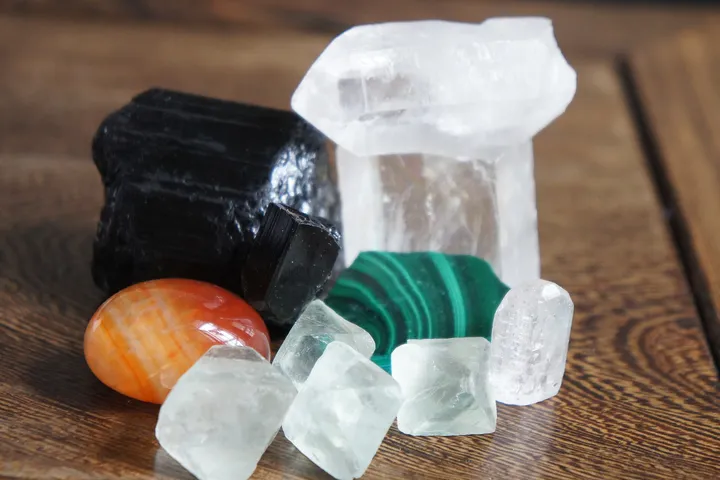
Two pieces that look identical can need completely different care. We explain which metals suit daily wear, why hardness decides how careful you have to be, and what only a jeweller, gemmologist or laboratory can confirm.
- Gold, silver, steel, titanium and platinum compared
- Stone hardness and what it means for cleaning
- Treatments, fillers and the questions worth asking
Buying, repairing and care
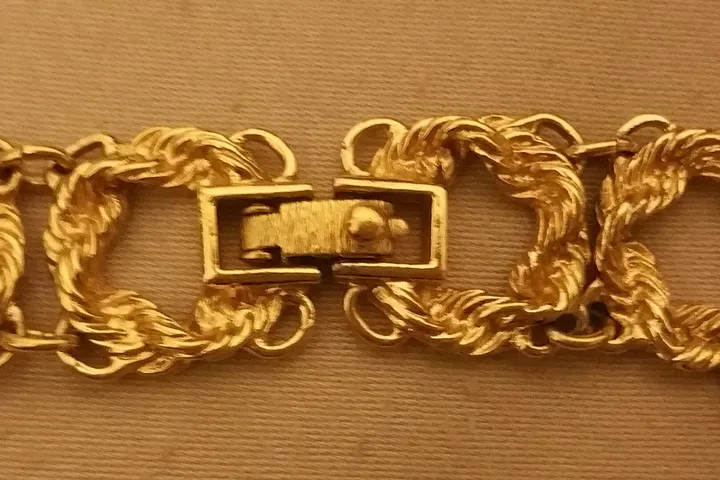
The practical half of owning jewellery: vetting a second-hand piece, asking the right questions about a resize or a repair, and keeping chains, clasps and straps sound for years.
- A checklist for second-hand pieces and sellers
- What a workshop can and cannot resize
- Cleaning and storage that does no harm
Latest guides
The newest articles on the site, each one a single question answered from the construction of a piece outwards.
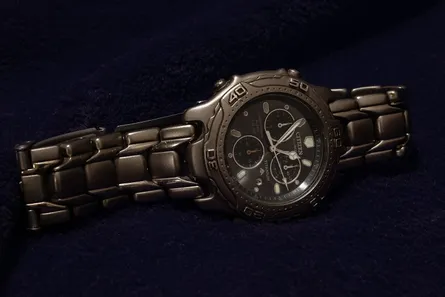
Watch Straps and Everyday Accessories: Materials, Fit and Care
- Trinket File
- Accessories
- 15 Sep, 2026
Most advice about watches concerns the movement, which you cannot see and will probably never touch. The strap is the part you feel all day, the part that fails first, and the one you can judge and ch
read more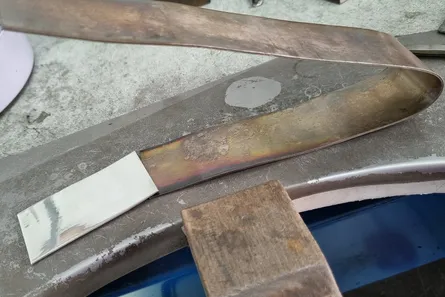
Tarnish, Plating Wear and What Can Be Restored
- Trinket File
- Care
- 26 Aug, 2026
A dulled piece of jewellery is usually called tarnished and treated with a polishing cloth. Sometimes that is right. Sometimes the dullness is not a film on the metal but metal that is no longer there
read more
Everyday Jewellery: What Survives Daily Wear
- Trinket File
- Buying
- 11 Aug, 2026
The jewellery that survives daily wear is not the most expensive jewellery. It is the jewellery with enough metal in the right places. Two pieces can carry the same hallmark and the same price, and on
read more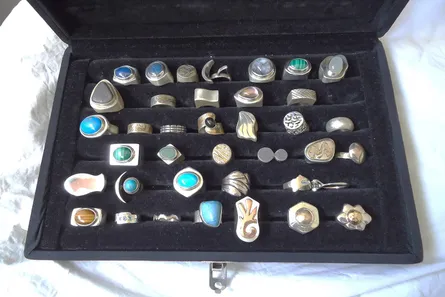
Caring for Jewellery at Home: Cleaning, Storage and Wear
- Trinket File
- Care
- 28 Jul, 2026
Very little jewellery is ruined by cleaning. A great deal is ruined by wearing it in the wrong places, storing it in a heap, and cleaning it with something more aggressive than it needed. The right ap
read more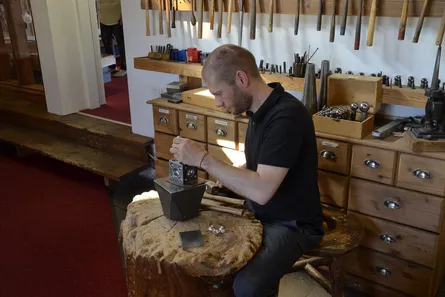
Resizing and Repairing Jewellery: What a Workshop Can Do
- Trinket File
- Repair
- 23 Jun, 2026
Most jewellery can be repaired and much of it can be resized. The useful question is not whether something is possible in principle but whether it is sensible for this piece, which depends almost enti
read more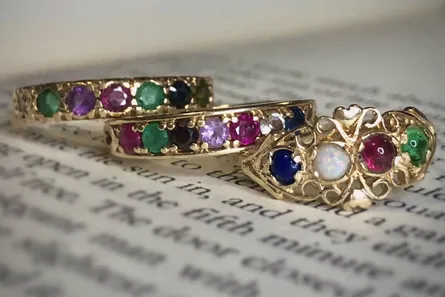
Settings Explained: Prongs, Bezels, Channels and Pave
- Trinket File
- Metals and Stones
- 03 Jun, 2026
A setting is usually chosen for how much of the stone it leaves visible. That is the wrong criterion, or at least an incomplete one. The setting is the structure that holds a brittle stone inside a me
read more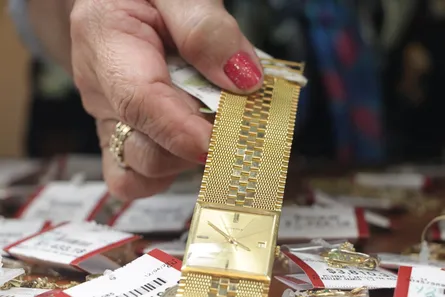
Buying Second-Hand Jewellery: What to Inspect and What to Ask
- Trinket File
- Second Hand
- 19 May, 2026
Second-hand is where a modest budget meets well-made jewellery, and it is also where a buyer has the least protection. Estate sales, pawn shops, auction houses, vintage dealers and online marketplaces
read more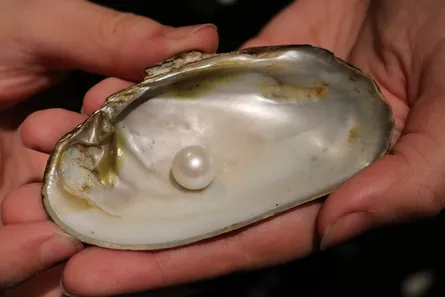
Pearls and Organic Gemstones: Judging and Care
- Trinket File
- Metals and Stones
- 05 May, 2026
Pearls and the other organic materials used in jewellery are graded with language borrowed from diamonds, which is where the confusion starts. A mineral stone is judged on colour, clarity and cut, and
read more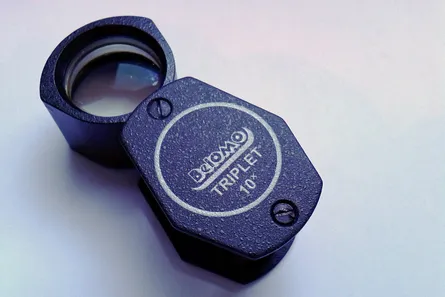
Judging a Stone: What You Can Check and What You Cannot
- Trinket File
- Metals and Stones
- 21 Apr, 2026
The gemstone trade runs on the gap between how a stone looks and what it actually is. Colourless stones can be diamond, moissanite, cubic zirconia or glass, and the difference is invisible to the nake
read moreStart with the guides
We do not publish to a schedule, only when there is something useful to say. If you are buying, start with construction and the marks on a piece. If you already own the piece, start with care.
Browse all guides