Buying Second-Hand Jewellery: What to Inspect and What to Ask
- Trinket File
- Second Hand
- 19 May, 2026
Second-hand is where a modest budget meets well-made jewellery, and it is also where a buyer has the least protection. Estate sales, pawn shops, auction houses, vintage dealers and online marketplaces all sell jewellery on different terms, and the terms matter as much as the piece.
This guide is a sequence. Work through it in order and you will catch most of what a careful dealer would catch.
Before you handle anything
Decide what the piece is for. A ring worn daily under physical work, a necklace worn to the office and a display piece bought for its design have different standards, and assessing a piece against the wrong standard wastes your time.
Then find out the terms: is there a return window, does it cover “not as described” or “changed my mind”, and does it apply to altered or resized pieces? In most second-hand sales, once you have had a piece resized or engraved, the return right disappears. Get the return terms before you get attached.
The inspection sequence
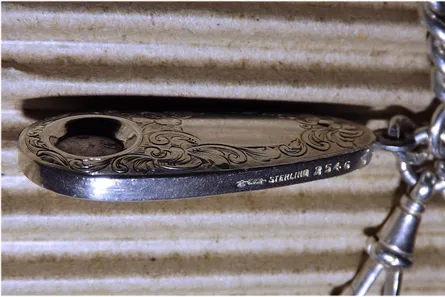
1. The marks. Find the hallmark or fineness stamp and photograph it. On a chain, check the tag near the clasp as well as the chain. Note what is there and, importantly, what is missing. Our guide to jewellery marks explains what each component means.
2. Colour consistency. Metal should look the same colour throughout a piece. A different tone at the edges suggests plating wear; a patch inside a ring shank suggests a previous repair; a join in a chain that is duller or greyer than the rest suggests silver solder rather than a fused or soldered-and-finished joint.
3. Weight and feel. Metal is dense. A bracelet that feels very light for its size is likely hollow or made of thin sheet. That is not always a deal-breaker, but it tells you how it will hold up to knocks and how easily a workshop can repair it.
4. Joints and solder. Look inside a ring shank for a seam from an earlier resize. Look for solder overflow on the surface, pitted metal around a join, or a joint that has been repeatedly reheated. Ask how many times a ring has been resized; a shank that has been cut and rejoined several times is thinner and more brittle than the original.
5. Prongs and settings. Check that every prong is present, of similar thickness, and that no stone rocks under very light pressure. Look at whether prong tips have been filed flat, which happens when a setting has been cleaned up rather than re-tipped properly.
6. Clasps, hinges and findings. Open and close the clasp repeatedly. Check the jump ring that attaches it — a butted ring that can be pulled apart by hand is a loss waiting to happen. On bracelets, work the hinge through its full range and confirm the safety catch engages. On brooches, prefer a rollover catch with a safety catch over an open hook.
7. Chains and links. Run the chain through your fingers, looking for elongated or opened links and for kinks that have been straightened. Fine chains that have been pulled are often closing in on failure at one more link than the rest.
8. Stones. Assess the setting rather than the identity. Check for cracks, chips at the girdle, missing pavé beads, and evidence of glue at the edge of a setting. A stone held by adhesive rather than metal is a repair waiting to happen, and glued repairs are common in inexpensive second-hand pieces.
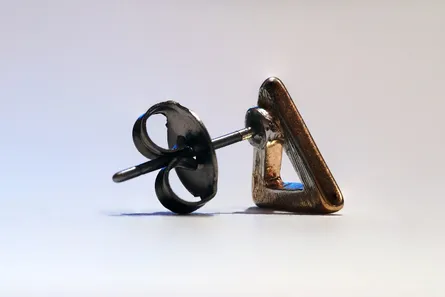
9. Earring posts and findings. Posts should be straight and firmly joined; butterfly backs should still grip. Replacement backs are cheap, but a bent or re-soldered post is a sign of hard use.
10. Engraving and wear patterns. Engraving that has been partly polished out, flat spots on a ring shank, and worn areas inside a bangle tell you how much the piece has been worn. None of it is disqualifying; all of it is information.
Red flags worth walking away for
- Precious metal described but no mark of any kind, and no willingness to have it tested.
- A chain described as solid that dents under gentle thumb pressure.
- Visible glue around a stone, or a stone sitting at an angle in its setting.
- Repairs that have been polished over rather than finished, with metal that feels spongy or cracks at the edge of a joint.
- Photographs that avoid the back, the hallmark and the clasp. On any online listing, the absence of those three images is the most reliable warning sign there is.
- Pressure to decide immediately, or a refusal to answer questions in writing.
Tests not to perform
Avoid acid test kits and scratch tests: both permanently mark a piece and neither produces a result reliable enough to settle a dispute. Be sceptical about magnet claims in either direction — most precious metal alloys are not magnetic, so a magnet sticking to a piece proves very little, and a magnet not sticking proves nothing at all. A “diamond tester” used casually at a market stall also proves less than it appears to; identity of a stone is a gemmologist’s job.
Questions to ask the seller
- Can you photograph the hallmark or stamp clearly, along with the piece in daylight?
- What is the weight in grams?
- Have there been any repairs, resizes, re-plating or stone replacements?
- If a stone is described as a particular gemstone, has it been tested, and by whom? Has any treatment been disclosed?
- What is the return policy in writing, and how long does it last?
- For watches: when was it last serviced, and are the seals intact?
After you buy
Have the piece looked at before you wear it hard. A jeweller with a workshop can confirm the metal, check prongs and clasps, and tell you whether anything needs tightening or replacing. A gemmologist can confirm or refute claims about stones. An assay office can test the metal where the marks are ambiguous. A watchmaker should be the one to open a watch case.
Clean a second-hand piece cautiously until you know what you are holding: jewellery has a lifetime of hand cream and dust in its crevices, but soft, porous or glued components dislike ultrasonic cleaners and dips. Our care guide covers the gentle method.
Finally, on price: we do not offer valuations, and neither should anyone else from photographs. If you need a figure for insurance, probate or a sale, use a qualified appraiser who can see the piece in person. For a purchase decision, the useful question is not what a piece is “worth” but whether it is made well enough to do the job you are buying it for.