Resizing and Repairing Jewellery: What a Workshop Can Do
- Trinket File
- Repair
- 23 Jun, 2026
Most jewellery can be repaired and much of it can be resized. The useful question is not whether something is possible in principle but whether it is sensible for this piece, which depends almost entirely on how it is constructed.
How a resize actually works
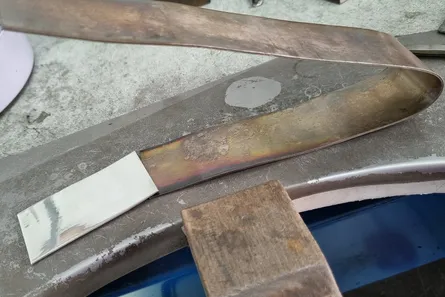
For a plain ring, a resize is a routine job. To make a ring larger, a workshop cuts the shank at the back, opens the gap, inserts a piece of matching metal, solders it in place and refinishes the joint. To make it smaller, it cuts out a section, closes the gap, solders and refinishes.
Two consequences follow. First, the ring needs enough plain, unbroken shank to be cut and rejoined. Second, every resize leaves a joint, and repeated resizing thins the shank. A ring resized several times can end up visibly thinner at the back, and a workshop may eventually recommend rebuilding part of the shank rather than adding another repair on top of the last.
As a rule of thumb, moving a ring one or two sizes is straightforward; moving it many sizes at once changes the shape, because an oval band tends to become round and a shaped profile can end up flattened near the joint.
Designs that limit or prevent resizing
Full eternity rings, set with stones all the way around the band, are the classic refusal. Cutting and rejoining a band with stones in the section being worked means the stones must be removed and reset, or the setting rebuilt. Some workshops will do it; many will decline, and the cost reflects the risk rather than the difficulty.
Channel-set bands are restrictive if the stones run across the area that needs altering, and tension-set rings rely on a precise spring in the metal, so cutting the band can compromise the setting.
Patterned, engraved or textured shanks lose part of the pattern wherever metal is added or removed, and the refinished area will not match the rest exactly. Hand engraving is particularly difficult to disguise.
Plated rings always lose some plating across the repaired area and will usually need re-plating afterwards to look even. Titanium, tungsten carbide and ceramic rings generally cannot be resized at all in the conventional way: titanium is difficult to solder, tungsten and ceramic are too hard and brittle for a workshop’s usual methods, and the practical answer for an ill-fitting one is usually a replacement.
Alternatives to resizing a ring
If a ring spins, tilts or slides off over a knuckle, or if the design cannot be resized, there are simpler options.
Sizing beads are small metal balls soldered inside the shank at the base. They take up space so the ring sits properly, and they are reversible — a good answer for a ring that fits over a prominent knuckle but is loose below it. Sizing bars do the same job with a flat strip of metal across the inside of the shank for wider styles. Spring inserts and clear plastic ring guards are temporary measures that disguise the problem rather than solving it: the fit changes as the plastic deforms, and they can trap moisture against the skin.
Whatever the method, a ring that spins constantly is a ring that can slide off a finger, and one that is too large is a ring that can be lost.
Chains, clasps and stringing
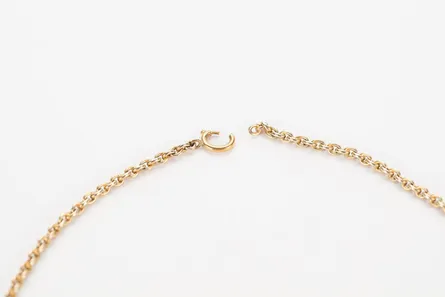
Chain repair is usually about replacing rather than restoring. The common jobs are clasp replacement — often an upgrade, such as a spring ring swapped for a lobster clasp on a chain that carries weight — jump ring replacement with a soldered or fused ring, rebuilding the stretched last few links, and adding a safety chain to a bracelet whose clasp is not confidence-inspiring.
Restringing pearls is a specialist job. Threads stretch and pick up dirt, and silk or synthetic thread is knotted between beads so that a break does not scatter the strand. Strands worn often should be restrung periodically, and a restringer will also check that the clasp is adequate.
Stone work
Re-tipping prongs is one of the most common and most worthwhile repairs. Prong tips wear down or get filed away over time, and a jeweller can build them back up rather than replacing the whole setting.
Replacing a lost stone is sometimes easy and sometimes not. Matching colour, size and cut is not always possible, particularly on older pieces where the stone may have been replaced before or the cut is no longer made. Ask to see the proposed replacement beside the piece before it is set.
Re-polishing restores a bright surface, and it removes metal permanently. A deep polish can soften an engraved pattern or blur a sharp profile, so it is worth asking a workshop to take off the minimum rather than chasing a mirror finish.
Re-plating, usually rhodium over white gold, restores a bright white colour. It is a surface treatment with a limited life, and it can look patchy if the polish underneath is uneven.
Watches
Watch work needs different tools, seals and testing from jewellery work.
Battery replacement sounds trivial, but on a screw-down case the gasket is disturbed when the case is opened. If a gasket is old or deformed, the watch may no longer be water-resistant afterwards, and the only way to know is a pressure test — equipment most jewellers do not have. That is a watchmaker’s job.
Bracelet sizing is routine, though it needs the right tools for pins, collars or screws. Strap changes are simple in principle, but it is easy to scratch a case lug with the wrong tool, and a strap needs a spring bar of the right length so it can move without pulling on the bar’s shoulder. Our guide to straps and accessories covers the details.
What to ask before you hand over a piece
- Who does the work, and is it done in-house or sent elsewhere?
- What does the quote cover, and is re-polishing or re-plating included or extra?
- What will the piece look like afterwards — will any engraving, pattern or profile be softened?
- Is there a written ticket describing the piece, including the number of stones and any existing damage?
- What happens if a stone breaks or a joint fails during the work, and who carries that risk?
- If the piece turns out to be unrepairable, how far will the work go before you are told?
Then photograph the piece from several angles and count the stones before you leave it. Both take a minute and both resolve disputes that would otherwise rely on memory.
When to decline a repair
A repair is not automatically worth doing. Listen to a workshop that tells you the metal is brittle from repeated heating, that a stone is cracked through, that a match cannot be found, or that the piece is fragile enough for the work to risk more than it fixes. Some items are best left alone, particularly old, thin or heavily restored pieces.
Whether a repair is worth the cost to you is your judgement, and it is not a valuation. A figure for insurance or a sale requires a qualified appraiser who can examine the piece.